The year is fast coming to an end, which means it’s time to set goals for the New Year.
Here are five best practices of public speaking that speakers don’t always follow, but should resolve to in 2012:

The year is fast coming to an end, which means it’s time to set goals for the New Year.
Here are five best practices of public speaking that speakers don’t always follow, but should resolve to in 2012:

Moses Cherrington asks:
Is there a most common problem associated with public speaking, according to your point of view and experience in public speaking?
There is, sadly, an abundance of common problems which afflict speakers. In this article, we’ll focus on three of the worst which sabotage many speakers.

Suit or sweater?
Pants or a dress?
Does how you dress impact your effectiveness as a speaker? If so, how?
Eric Hudon (@erichudonca) asks this on Twitter:
@6minutes How should a speaker dress and in what circumstance? Casual, Formal, Other? What is to be avoided?
In this article, we examine clothing do’s and don’ts for public speakers.

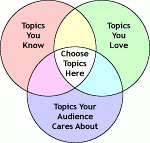
Imagine you are scheduled to deliver a speech in two weeks. At first, you are excited about the opportunity. Very soon, however, a feeling of dread overwhelms you — what will your speech topic be?
Conventional wisdom says to talk about what you know, but conventional wisdom is only partially correct.
This article reveals three questions you must ask before choosing your speech topic, and how the answers lead you to great speech topics for you and your audience.

For many of us, the appeal of writing a speech falls somewhere down there between getting a speeding ticket and being audited.
But take heart! You’re in a very powerful position as a speechmaker, and that’s a good place to be. A well-written speech can drive sales, deepen commitment, motivate hearts and minds, and even change the world. It can be magic.
Now, you may not feel very powerful as a speechwriter, especially if you don’t do it often. But the truth is, you already have some magic speechwriting powers at your disposal, and you don’t need to spend seven years at Hogwarts to learn how to use them.

Most speakers approach their presentation as if they were the star actors in a theater play. They decide on the content, rehearse, and then deliver their impeccably prepared speech.
Giving a presentation however is different from playing Hamlet. When watching a play, or a dance show, the audience wants to be entertained and emotionally engaged. When attending a presentation, the audience expects to hear a relevant message and bring home something of value. They will evaluate the speaker based on whether he or she can convey information that they can understand, digest, remember, and utilize.

Many speakers are guilty of making faulty assumptions about their presentations, and their ability to deliver them well. Sometimes even seasoned speaking professionals like me fall victim to this behavior.
How about you?
In this article, you will learn:

Some speaking sins, like the occasional “ah” or “um”, will not doom your presentation. With good content, you can earn forgiveness from the audience for those sins.
Other speaking sins are so grave that when you commit them, your speech or presentation is certain to fail. This article reveals the seven deadly sins of public speaking.

“Loved it! Well DONE.”
“Great speech – hilarious!”
“Mate, that was awesome.”
A great Best Man Speech is the highlight of any wedding banquet.
But exactly what makes a great Best Man Speech?

When you deliver a message to your audience, you are providing customer service.
Do you provide good service, or bad service? More importantly, does it matter?

I wish all my colleagues would read this business communications book.
Advanced Presentations by Design: Creating Communication that Drives Action offers a comprehensive approach to planning and designing presentations focused on selling ideas and persuading your audience.
This article is the latest in a series of public speaking book reviews here on Six Minutes.