


Ethos, Pathos, Logos:
3 Pillars of Public Speaking

2300 years ago, Aristotle wrote down the secret to being a persuasive speaker, the secret which forms the basis for nearly every public speaking book written since then.
Do you know the secret?
If you don’t, you might be wondering what a 2300-year-old theory has to do with public speaking in the year 2010.
In a word — everything!
In this article, you’ll learn what ethos, pathos, and logos are (the secret!), and what every speaker needs to understand about these three pillars of public speaking.
What are Ethos, Pathos, and Logos?
So, what are ethos, pathos, and logos?
In simplest terms, they correspond to:
- Ethos: credibility (or character) of the speaker
- Pathos: emotional connection to the audience
- Logos: logical argument
Together, they are the three persuasive appeals. In other words, these are the three essential qualities that your speech or presentation must have before your audience will accept your message.
Origins of Ethos, Pathos, Logos — On Rhetoric by Aristotle
- Ethos, Pathos, Logos - Introduction
- Ethos - Speaker Credibility
- Pathos - Emotional Connection
- Logos - Logical Argument
Written in the 4th century B.C.E., the Greek philosopher Aristotle compiled his thoughts on the art of rhetoric into On Rhetoric, including his theory on the three persuasive appeals.
Many teachers of communication, speech, and rhetoric consider Aristotle’s On Rhetoric to be a seminal work in the field. Indeed, the editors of The Rhetoric of Western Thought: From the Mediterranean World to the Global Setting call it “the most important single work on persuasion ever written.” It is hard to argue this claim; most advice from modern books can be traced back to Aristotle’s foundations.
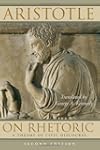 In The Classic Review, Sally van Noorden points to George Kennedy’s modern translation as the standard reference text for studying On Rhetoric. Kennedy’s translation is the source that I use. (At the time of this writing, it is available from amazon.com for $24.56, 18% off the list price.)
Ethos
Before you can convince an audience to accept anything you say, they have to accept you as credible.
There are many aspects to building your credibility:
- Does the audience respect you?
- Does the audience believe you are of good character?
- Does the audience believe you are generally trustworthy?
- Does the audience believe you are an authority on this speech topic?
Keep in mind that it isn’t enough for you to know that you are a credible source. (This isn’t about your confidence, experience, or expertise.) Your audience must know this. Ethos is your level of credibility as perceived by your audience.
We will define ethos in greater detail, and we will study examples of how to establish and build ethos.
Pathos
Pathos is the quality of a persuasive presentation which appeals to the emotions of the audience.
- Do your words evoke feelings of … love? … sympathy? … fear?
- Do your visuals evoke feelings of compassion? … envy?
- Does your characterization of the competition evoke feelings of hate? contempt?
Emotional connection can be created in many ways by a speaker, perhaps most notably by stories. The goal of a story, anecdote, analogy, simile, and metaphor is often to link an aspect of our primary message with a triggered emotional response from the audience.
We will study pathos in greater detail, and look at how to build pathos by tapping into different audience emotions.
Logos
Logos is synonymous with a logical argument.
- Does your message make sense?
- Is your message based on facts, statistics, and evidence?
- Will your call-to-action lead to the desired outcome that you promise?
We will see why logos is critical to your success, and examine ways to construct a logical, reasoned argument.
Which is most important? Ethos? Pathos? or Logos?
Suppose two speakers give speeches about a new corporate restructuring strategy.
- The first speaker — a grade nine student — gives a flawless speech pitching strategy A which is both logically sound and stirs emotions.
- The second speaker — a Fortune 500 CEO — gives a boring speech pitching strategy B.
Which speech is more persuasive? Is the CEO’s speech more persuasive, simply because she has much more credibility (ethos)?
Some suggest that pathos is the most critical of the three. In You’ve Got to Be Believed to Be Heard, Bert Decker says that people buy on emotion (pathos) and justify with fact (logos). True? You decide.
Aristotle believed that logos should be the most important of the three persuasive appeals. As a philosopher and a master of logical reasoning, he believed that logos should be the only required persuasive appeal. That is, if you demonstrated logos, you should not need either ethos or pathos.
However, Aristotle stated that logos alone is not sufficient. Not only is it not sufficient on its own, but it is no more important than either of the two other pillars. He argued that all three persuasive appeals are necessary.
Is he right? What do you think?
Next in this Series…
In the next article of this series, we examine ethos in greater detail.
Please share this...
This is one of many public speaking articles featured on Six Minutes.
Subscribe to Six Minutes for free to receive future articles.

Subscribe - It's Free!
| Subscribe via Email |  |
| Subscribe via RSS |  |
| Follow Us |


|
Similar Articles You May Like...
Find More Articles Tagged:
 66 Comments
 Recent Tweets
Ethos, Pathos, Logos: 3 Pillars of Public Speaking https://t.co/uAammoIYxr
— @JastrzebskiJ Sep 27th, 2016
Ethos, Pathos, Logos: 3 Pillars of Public Speaking https://t.co/WpXWFuLRrz
— @Rjones5236 Jan 29th, 2017
Ethos, Pathos, Logos: 3 Pillars of Public Speaking https://t.co/63xD1loFL4 by @6minutes
— @MatteoCone Feb 23rd, 2017
Ethos, Pathos, Logos: 3 Pillars of Public Speaking https://t.co/zJv9Kj2slk by @6minutes
— @ae_bellamaven May 22nd, 2017
Improve on your persuasion skills! Its an amazing concept #ethos #logos #pathos #DESMDM https://t.co/CxTLwTVZUE
— @hvgalla Sep 19th, 2017
@VenkatSundar77 Not ethos, rather, pathos tends to move the needle. Here’s a quick link: https://t.co/g7IwbwGaEe
— @sreedhari_desai Sep 26th, 2017
What I’m studying I my Principles of Public Speaking Class! https://t.co/FKDMx9rYEL
— @Laedee Oct 18th, 2017
Absolutely essential in modern publics peaking: Ethos, Pathos, Logos: 3 Pillars of Public Speaking… https://t.co/Rtx6v81Kbv
— @LucilleOssai Jul 1st, 2018
Ethos, Pathos, Logos: 3 Pillars of Public Speaking – https://t.co/YlOvKaWHOL
— @hperezsegnini Aug 24th, 2018
Ethos, Pathos, Logos: 3 Pillars of Public Speaking https://t.co/EhEKCIL9St by @6minutes
— @ChambeshiS Sep 21st, 2018
 33 Blog Links




I once heard these three terms applied to the writings of the apostle Paul and they made good sense then too. You’ve done a tremendous job of introducing these pillars – can’t wait to see what the next few posts hold!
Brandon:
Indeed! Ethos, pathos, and logos apply to all forms of persuasive communication
Great thought-provoking post.
I think the strength of each point relies on your audience, and what you are trying to persuade them of. For example, a sales presentation may use pathos as its main strength, while a financial presentation may use logos.
Ultimately though, I’d agree with Aristotle and say that all three are necessary in order for the speaker to truly get his message across.
Jessica:
Yes, you’re right. It depends on your audience, your message, and the context. In certain situations, one of the three may be more important. The danger, however, is to assume that the other two are of no importance at all, and this is rarely the case.
Excellent article Andrew. Waiting to read more in the following posts.
About the importance of Ethos, Pathos and Logos, I have something to add.
Assume you are going to listen to a talk by a stranger. What comes to mind first (may not be more important)? Ethos. We ask ourselves, who is this person? We try to find more about the person.
You may choose to listen to him or you may choose to ignore.
Once you start listening to him, you are exposed to emotions (in his speech) and the logic in his speech. You can be convinced by either of these. But you will act ONLY if you are emotionally moved. Logic alone is not enough. We all know what is right but how often do we do what is right?
To summarise, I feel Ethos Pathos Logos come in a sequence. Ethos comes first. Hence, we should not compare it to the other two. Between Pathos and Logos I feel humans act on emotions and not on logic. Hence, Pathos scores over Logos (though all of us want to believe that we are more logical and less emotional).
This is my honest take on the subject. Thanks for bringing it up.
Great look at a classic resource, Andrew. The Greeks had mastered the art of persuasive speaking long before PowerPoint!
I tend to agree with Jessica. You decide on the mix of ethos, pathos and logos in your speech after you analyse the audience. An academic audience might judge on ethos, a political rally on pathos, and a finance committee on logos. But in the end, a great speech has a mix of all three.
An interesting and important introduction to making persuasive presentations. Thanks.
U L Mehta
Free version online:
http://classics.mit.edu/Aristotle/rhetoric.html
Well written, enjoyed very much. Thanks!
I really liked the article.If i have to describe in one word”eyeopener” for an aspiring Speaker.
This is a very interesting article. I really agree with those three points. I use a website called Present.Me to help me with those qualities when public speaking. It allows you to attach a video of yourself presenting to your Powerpoint slides. Not only does it mean you can send a present.me in your place if you cannot attend a presentation, but you can also work on your performance by watching it and hearing yourself. Hope this helps.
I am a CST 100-002 student at Northern Virginia Community College: Annandale Campus.
I think, that all 3 rubrics are very important. Ethos is very improtant, because if you cant trust the speeker or cant find a connection with, you probably will not give enough attention to the whole speech. Next; Pathos. What is a part of Ethos to give your speech more expression. Last but not least; Logos. To deliver a speech that makes sense and everyone can understand.
Student at NVCC public speaking. I personally think a speech that has a logical base with an emotional appeal. An audience can connect better with someones emotions but it must have logic behind it so it can be a good argument or speech. If the audience just hears a speech with ethos it can become boring and hard to connect to.
I am learning about this in My CST 100-02 class from NVCC Annadale campus. I had very little knowledge of ethos, pathos, and logos prior to taking this class. I believe that is it very importan to have all three ethos, pathos, and logos while giving a speech on pursuasion. I also think that pathos is the most important because many people go on an emotional stand. To persude someone, it is necessary to have all three present. It is absolutely amazing that this theroy came in ancient greek from Aristotle. It is the basis to writing a persuasion speech.
As a student in CST 100-02: Principles of Public Speaking at the Annandale Campus of Northern Virginia Community College I should say that as Aristotle said Ethos Pathos and Logos should appeals in one’s speech together. In fact, they complete each other so if a speaker doesn’t have any of these in his speech it looks like a defective speech. Also, about the question that you had that which one is important I can tell that Logos is the answer as Aristotle said. I think Logic can be understood very early by the audience. The best way to prove logic to the audience can be giving some examples to clear everything for them. Although,Pathos is the one that I think should be the second important one after Logos because by the emotion that speaker gives to the audience he can be much effective on them.
I am a CST 100-002 student at Northern Virginia Community College and I have to say this article gives the “secret” to a successful persuasive speech. From my prior knowledge, I know that Aristotle taught the youth to do public speaking which was looked at as a threat to society because persuasive speakers were able to sway people from distancing themselves from their beliefs. With this in mind, I think pathos is the most powerful component of the three pillars because if you connect with the audience, they will engage in what you have to say and it is a lot more memorable with the support of logos.
Hello, my name is Bahaa student in CST 100-36: Principles of Public Speaking at the Annandale Campus of Northern Virginia Community College. After reading this article it opened my eyes to the true factors to presenting a great speech. Ethos, is what can define as reputation. Too be credible you need to be known as a person with good character as well as other things listed.
Whatever the speech is about the emotion, the look as well as the tone need to represent it so the audience can feel it.
I am a CST 100-002 student at Northern Virginia Community College: Annandale Campus.
Great Article. All 3 should always be in a speech if you want to make it good. I think that Pathos is first of all because we all have emotions and is a way we all connect to each other and express what we do and what we say. If you have a connection with Pathos then the other 2 are easily going to follow.
Ethos, Pathos, and logos
This article clearly explains the pillars of public speaking, Ethos, Pathos, and Logos. I really enjoyed reading it.
In my opinion, all three are essential elements in public speaking; however, depending on different situations, they might differently take part. The best way to determine which one of these factors outweighs the others is by analyzing the audience and kind of speech that is being delivered.
For example, if the audience is composed of well educated and high ranked people, maybe ethos and logo come before the pathos; however, in other situations, for example talking for younger audience, the pathos outweigh the other two.
Thanks,
Jhabiz Nourmohammadi
Student in CST 100-02: Principles of Public Speaking at the Annandale Campus of Northern Virginia Community
I am a CTS 100-02 student at NVCC Annandale campus. It could be true that Logos is the most important one. If we deliver message that makes sense and base on facts, automatically people will respect and believe us.
I am a student at the NOVA Annandale Campus CST 100-02. We’ve been learning about this in class and I really think that all three are essential in speech. If you don’t have ethos, you’ve lost your audience before you’ve even finished your speech. If you don’t have pathos, your audience cannot connect on an emotional level, which is important and effective. Logos is also important on a logical basis, you want your speech to have factual evidence and for it to make sense. All three together are a recipe for a great speech.
I am a student at the NOVA Annandale Campus CST 100-02. We’ve been learning about this in class and I really think that all three are essential in speech. If you don’t have ethos, you’ve lost your audience before you’ve even finished your speech. If you don’t have pathos, your audience cannot connect on an emotional level, which is important and effective. Logos is also important on a logical basis, you want your speech to have factual evidence and for it to make sense. All three together are a recipe for a great speech..
I am student in CST 100-36: Principles of Public Speaking at the Annandale Campus of Northern Virginia Community College. By reading this article, I have understood the importance of these three pillars of public speaking. Now I understood that why our professor focused on to know everyone in the class from day one. He was trying to increase Ethos of each student. I also understood that we can improve Pathos and Logos individually but not Ethos. I believe that these three pillars of public speaking played a huge role in first presidential debate.
I am a student in CST 100-36: Principles of Public Speaking at the Annandale Campus of Northern Virginia Community College
Depending on the speech pathos could be the most important pilliar of speech. Motivational speeches or speeches for entertainment certanly draw more from pathos. I agree that logos should be the most important of the three but its clear that popularity is more important, especially for the masses. Looking at the presidential election that it going on, credibility and facts are sidelined to everything else during their campaigns.
I am a student at the NOVA Annandale Campus CST 100-02. I think that a speech should have ethos and pathos to it. Without ethos or pathos there would be a harder time to connect to the speaker. Yes logos is important as well because the speech must make sense but I dont think that it is quite the important
I am from the class Principles of Public Speaking at the Annandale Campus of Northern Virginia Community College.
I remember in my junior year of high school, we spent the whole year learning about incorporating ethos, logos and pathos into all of my English writing. Now I am in college, and learning about it in public speaking. I believe that a speech without ethos, logos and pathos, is not whatsoever an effective speech.
Hi I am a student in CST 100-02 at the Annandale Campus of Northern Virginia Community College.
After reading the article I believe that all are a great way to get your point across and a great way to be heard. But like the scenario above with the 9th grader versus the CEO you do not necessarily have to have all three to be a reliable source.
There is a certain way to hold your self and a certain way of delivery that implies Ethos, If you can come out there with the kind of, lets call it swagger for want of a better term, if you come out there with the kind of swagger that makes you not arrogant but believable and put the force of your confidence behind that act, that is a truly powerful move and that will build your Ethos.
Logos, while important no doubt, I feel is less something to strive for and more of something that should be there before you speak publicly period. If you don’t make sense, how will you be understood? and if you are not understood, your Ethos will go out the window, and if you are not supported by your audience logically by Logos and credibly by Ethos, then you will have Pathos, but it will be negative.
So all three pillars are connected and share the rewards and consequences. Now if you have one you do not necessarily have them all but if you have one in one direction, negative or positive, it is much easier to continue to head in that direction with your audience, and if its negative, its much harder to dig your self out of that hole because we as audience members and listeners do not easily forgive or forget when it comes to rough speech making.
Good article, thought provoking. Makes you think about what you say and why you say it.
William Zach Roberts
Nhat Doan from CST 100-36: Principles of Public Speaking at the Annandale Campus of Northern Virginia Community College. This is a useful article for our persuasive speech later on in the course. Now I know which part I need to focus on in order to deliver a good persuasive speech. Even though I don’t have that much credibility as a student, I believe my logic will fill right in.
Hi I am a CST 100-036 student at Northern Virginia Community College, Annandale Campus.
I also think that all are very important. But pathos is more important then the others. By using the element of pathos you connect with your audience, they might even give you credibility. And because they gave you the credit, they believe that you are talking the truth and at the end they even think that your thoughts are logical. That is how religion used as a political power and it is really persuasive for a majority of people.
I am a student at the NOVA Annandale Campus CST 100-02.
It seems to me like these three pillars are like a three legged stool. If you lose one of them it gets incredibly hard not fall down. As a result, a truly great speech will have all three pillars to some degree. However, I notice that in most speeches a speaker will rely on one or two more than the others. Although the others are present in the speech, the take a back seat to one or two of the other pillars.
It is difficult to say which of these pillars is most important. I think it depends on who your audience is to a large degree. However, if I had to pick, I would have to say that pathos seems the most important. Entire countries have been called to war based on emotional appeal. This is a loose argument, though, as all of the pillars are vital to a good speech.
This was a thought provoking article and it will make me think about how I construct my speeches.
I’m a student in CST 100-36: Principles of Public Speaking at the Annandale Campus of Northern Virginia Community College. I feel that this article is very true. If speeches didn’t have these elements then the speech would be defective. You want people to be entertain and learn something with what you have to say. In my opinion, to have a very good speech, you have to have these three elements. A person should stand out so he or she could be remembered as a person who gave a really good speech. Without one or 2 of the elements then the speech is just a speech. It will be very boring to listen to and I would fall asleep. These points are important and people should put them into there everyday speech.
as a student in CST 100-02: Principles of Public Speaking at the Annandale Campus of Northern Virginia Community College i appropriated articles like this it makes me a better speaker. I learned about ethos pathos and logos in history in high school and never thought twice about it but now that i see how it affects a speaker and there audience and the outcome i have a whole new appreciation for them.
I am a cst 100-002 student at nova.
Although the 3 persuasive appeals are equally important, i find my self more inclined to use logos but as aristotle said just logos isnt enough, so i think that using a mixture of the three appeals combined with knowledge of the audience, you can create a great speech.
I am a student in this Principles of Public Speaking class at the Annandale Campus of Northern Virginia Community College. I think Ethos, Pathos, Logos are very important in a persuasive speech because we have more opportunities to persuade the audience.
Good evening. I am a student in CST 100-36 at the Annandale campus of NoVa Community College.
When in doubt, side with Aristotle. Logos alone is not enough, but having no ethos seems to be a non-starter. Pathos can be incredibly powerful, but cannot stand alone, unless the audience is not paying attention.
Obviously having a balance of all three would be best, but if any of them are dispensable, it would be pathos.
Hi, i am student from Nvcc Annandale in Cst 100-036. This article breaks it down easily for me and gives me insight on what a great speech is. The most important to me is definitely Logos(Logic) because even though credibility is important, i think a well put logical speech can cover up for someone who is not as credible as others. If the speech gives good points and evidence, and they can relate it to the audience then ethos might be out shadowed. All 3 of these appeals will make the speech most efficient.
Hello Im CST 100-36 Student from northern virginia community college in Annandale campus. I really thank you because you posted the article that will really help me with the speech. I also believe that the audience can be connect with the speaker who is emotional more easily. But the speech should be also logical at the same time. I will try to remember this article for my future speeches.
Hi, I am a CST 100-036 student at Northern Virginia Community College, Annandale Campus.
The article is very informative. I personally like this topic, which is about the importance of Ethos, Pathos, and Logos. In my perspective, Logos is the most important one among the three. It is the determinant of each and every speech that a person gives. Why? Simply, the content of any speech is most crucial. If a speech delivers truthful contents, includes true facts, gives reasonable examples, audience would love to believe in the speech, as well as the speaker of that speech. Ethos is a factor that help the audience to determine the credibility of the words that the speaker speaks. Pathos is the way to deliver the content of the speech toward the audience. Although each of them contributes to the success of a speech, the content/info from the speech is the most important thing. Audience who wants just the most insight info from the speech, will care only to what the speech mainly concentrates in.
Thank you for the article.
Long term (assuming one does not go back over and over again to the audience I think Logos is more important. But if one is trying to persuade in the short term (say a few days) Pathos is stronger. Just my view.
I’m a sixth grade teacher getting ready to prepare students to do a persuasive essay and oral report. Most of the examples they will be seeing prior to this are from the civil rights and abolitionists movement.
I understand that most of the examples in logos are “concrete” in nature, and most in pathos are emotional. Where does something like morality and ethics(a large part of the argument against slavery and racism)fit in which has components of both?
Alice, I think you’ve answered your own question. Speakers can use both pathos and logos when making morality and ethical arguments. For example, consider a speech about slavery.
Pathos appeals include things like photographs of slaves being mistreated; descriptions of the horrible conditions on ships bringing slaves across the Atlantic; stories about slaves being ripped from their families and sold at auctions. All of these can invoke very strong emotional responses.
Logos appeals include things like a discussion of basic human rights and freedoms; a step-by-step argument about how slaves were not “better off” in the “care” of their owners; historical traces of slavery in other civilizations. All of these could make use of careful, reasoned logical arguments.
I really am excited to find such a rewarding group ofworthwhile articles on my favorite topic: persuasive speaking!!!
Thank you.
This is excellent.
As an educator, I refer to your website to teach my students the fundamentals of speech writing. It is succinct and encapsulates the key points in a well-considered manner.
Thank you
Renee Durieux from CST 100-037N. I think this article made a really good point. It is easy to overlook pathos and ethos and focus only on logos (logic) when writing a speech. Throwing out a bunch of facts on the topic might seem like the best strategy to convince others, but if they don’t trust you, or they are bored they won’t listen. I think each of the three are necessary for a good convincing speech, and therefore none of the three are more important than the others, they must come together.
I’m a student of NOVA and currently taking CST-100 (036N). I agree with the three pillars of public speaking. Being credible is one of the most important thing on a speech and its better to be known as someone that is reliable. The emotional factor has to be the connection with the audience. Lastly the logical argument should make the prefect ending for the speech.
I remember learning this in high school. Very important during an essay. Didn’t think so much about using it towards a speech. Its a refresh and a great way to help with a persuasive speech. I think all are importance, one cant be one without the other.
CST 100-36: Principles of Public Speaking at the Annadale Campus of Northern Virginia Community College
I’m a student at NOVA and I’m currently taking CST-100 (036N) with Professor Tirpak. I’ve used Logos, Ethos and Pathos before when writing essays for English but I never thought that they could be used for speeches as well. I also think that the most important of these three pillars would probably be Pathos, simply because connecting with the audience is the most important part of any speech. Ethos is definitely important, because the more credibility you have the more willing people will be to listen to you, but even someone with no credibility can give a fantastic speech by using the power of Pathos.
I am a student in Professor Tirpak’s CST 100-036 class.
These three pillars are what define your speech. While I wouldn’t say that one is inherently more important than the other, I would argue that ethos, pathos, and logos can vary in importance for different types of speeches. A technical report before colleagues will require strict attention to logical argument, while a speech designed to rally a crowd will be more intently focused on pathos. In all speeches though, each of the three aspects should be present.
So glad I came across your article, and have enjoyed following the comments (mostly of students) at the end. I’m signing up for more content loaded six minutes…and for the interaction it stimulates. Lots going on. Thanks!
Thank you so much, this has really been an eye opener.
These three pillars I learnt while at Junior College. Entering the work force and business world has proven how important that lesson was. Great explanations. Thanks.
Just referred to this article to complete an essay!
In my essay, we were required to analyze an article and point out where and how the author uses all of the different appeals. It was kinda tricky because I had a news article, and in news articles, the authors “try” to publish “unbiased” pieces, but of course there’s always some bias in their writings to give their newspublisher some leverage.
So for me, finding pathos arguments in the news article was pretty tricky. The author mainly relied on ethos and some logos to prove his claims, but thanks to the stuff you posted about pathos, I was able to find one pathos appeal in his article (seriously, there was only one!). Thanks so much for this post!
I think that all three Ethos, Pathos and Logos are essential to master the art of persuasive communication, to not have creditability, or logic then Pathos in my view is useless. Where will you emotions be when you know that the speaker is not credible and have no logics behind his/her speeches?
Nice job Andrew
These articles are truly beneficial to my studies in Criminal Justice
That was a great post Andrew. Being a toastmaster myself and watching the speech again I would say your analysis is very insightful and provides actionable steps to be used in a speech or even meetings and other speaking engagements. I’ve recently wrote a post about Life Lessons that you can derive from his speech and did mentioned your analysis of the speech. You can read it on my blog http://sumo.ly/afaP
Thanks
Peter
Thanks Andrew for introducing such important pillars to learn, can’t wait to read more of your articles for better understanding to exercise.
The most important one is ETHOS because,if you can not display your talent or deliver your message in such a way that your audiences are convinced;you can not gain any respect or high esteem from them.This means you have to show your credibility in your speech through references and quotes of other scholars to effect behavioral change.I AM A PG STUDENT OF SBCC UNIVERSITY OF CALABAR NIGERIA.
Hi,
Thanks. This site has really helped as i prepared for my CC2
Cheers
Monica
Mombasa, kenya
Watt is the three aspects of credibility? and watt is artistic proof ? I can not understand it!
I think that these are excellent tips because I have to give a speech and make a poster in ELA about a group that is being oppressed (my topic is LGBTQA).You have done a great job on descibing these three topics!
I think Pathos being that connection from sender to receiver or rather speaker to audience is sustained by Logos that logical argument and then gives way to Ethos credibility. That’s just my take on it.
very interesting I like the article he is very emotional and well put together nice.
I think it depends on your audience as well, and your message. I agree that all three are necessary at some point in the presentation to capture your audience attention and keep it throughout the entire presentation.
I believe that pathos is the most important. For example, the Gettysburg Address. There was so much emotion because many soldiers had just died. Ethos would be completely unhelpful in this speech, and logic doesn’t really work in the scenario either. No one wants to hear logic when their friends and family were just killed.
This article has all the required information, which i required for my persuasive presentation. In short it is an eye-opener. Thanks to the author of this article as well as my professor who recommends this article to me.